Commentary: Failing the ‘Fake News’ Test at a Crucial Moment in History

BOSTON — There’s a story missing from the Internet.

It’s not a big story, but it’s an important one. It’s just 250 words long and its content is the result of routine reporting; nothing especially remarkable.

It’s not a blockbuster. The article was written for the Austin Business Journal, a niche publication, about a relatively minor issue. Yet it’s notable because its removal from the Web represents a betrayal of public trust at time when trust is at a premium and journalism is already in a tenuous position.

The story’s disappearance should serve as a wake-up call to anyone who values the truth because its removal was done by a news company with a national reach. It also shows that some American companies won’t hesitate to put its self-interests ahead of the public’s right to know. Censorship remains an option.

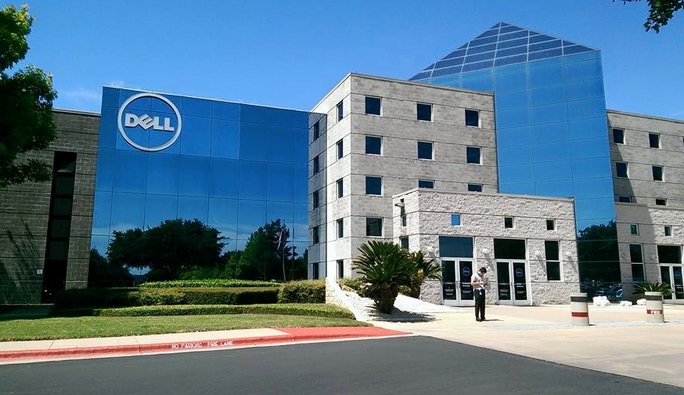
The ABJ story was a follow up to a routine piece announcing that environmental group Keep America Beautiful would present CEO Michael Dell with an award in New York City. The follow-up piece highlighted the role that a $75,000 “sponsorship” by Dell may have played in the award. Was it a legitimate award, or did Dell effectively buy it? The online article was deleted more than a week after it ran when Dell Inc., the technology giant based in Round Rock, Texas, threatened the ABJ’s North Carolina-based parent company, American City Business Journals. (Here’s an early version of the deleted piece.)

In early 2016, Michael Dell revealed his opinion of the news business when urging workers to ignore reports that a proposed business deal had hit a snag: “The media business is under a lot of stress and their business model is sort of cratering,” he said. “And what they do to survive in those tough times is they create something called click bait. They create an inflammatory headline. So and so was impregnated by aliens, or whatever, click on here to read about this story, see some ads, try to get some money.”

More than 700 stories about Dell, or referring to the company, appear under this reporter’s byline. Many of them were skeptical of information released by the company and revealed issues such as employee lawsuits Dell officials probably preferred were not reported. They commented for the (deleted) award story and never disputed its accuracy or fairness after it was posted. As such, Dell’s threat more than a week after the story ran raises questions about the company’s motivations.

In April, I recounted in another blog post the details of Dell’s censorship and the series of retaliatory actions it took with the ACBJ as an apparent accomplice. To recap, an ABJ manager said that while I was on vacation in mid-2015 a Dell official threatened our parent company over our coverage. Two weeks later, I was suddenly given an unscheduled performance review that stated my job was in jeopardy despite the lack of a single human resources issue during 10 years with the company. I was then dismissed after breaking another enterprise story about Dell planning to relocate its annual users conference from Austin to Las Vegas.

In April, the ACBJ’s CEO declined to comment on the matter to Talking Biz News, unimaginatively referring to it as a “personnel issue.” He was right. But the problem doesn’t concern the ‘personnel’ a reader would be led to believe; it’s the managers not standing up to corporate bullies.

It’s important to note that the Dell debacle has national implications because the ACBJ operates news outlets in 43 metropolitan areas. Many of the outlets provide content to NPR stations assuming the reporting is unbiased. However, it’s unlikely that this was an isolated incident. How many other companies dictate news coverage in ACBJ newsrooms?

ACBJ is owned by Advance Publications Inc., a New York-based company controlled by the Newhouse family, major donors to Syracuse University’s journalism program. That ownership structure insulates the parent company from accountability, enabling it to promote its support of quality reporting while its own lower-level execs undermine reporting.

Advertisers and the politically connected have influenced news coverage since time immemorial. But such pressures are arguably at their greatest level now as news business profits shrink. As a result, it’s never been more important to guard against anything that can result in biased coverage and violate time-tested principles.

Reporters are like the truth; you have to face them sometime, no matter how much power you have.
Commentary: Censorship And Tech Companies Keep Austin Weird

BOSTON — In November 2016, the day after Donald Trump was elected amid charges of fake news, I was walked out of my newsroom after reporting real news.

It was the culmination of a 16-month case of thinly disguised censorship sparked by Texas-based Dell Technologies Inc. threatening the Austin Business Journal over its coverage. Dell had an unlikely accomplice, a media organization affiliated with the company that owns that paragon of journalism, New Yorker magazine, and donates millions to Syracuse University’s lauded journalism program.

I had been a reporter for North Carolina-based American City Business Journals for 11 years, covering technology for three years at its Boston-based Mass High Tech and then eight years at the Austin Business Journal. Managers dismissed me after breaking a story about Dell planning to move its annual users conference (called Dell World) from Austin to Las Vegas. We also reported that the relocation would cost Austin businesses about $8 million in annual revenue.

Two weeks after the article, ABJ managers called for an unscheduled performance review. Despite an unblemished tenure, they said my job was in jeopardy — something that had happened only once before, also two weeks after a manager said a senior Dell executive threatened our parent company after we broke a previous Dell story in mid-2015.

The 2015 threat came when we reported in a later version of this brief that Dell donated $75,000 to an environmental group after it provided CEO Michael Dell with a “Vision for America” award. The 230-word article, a follow-up to this brief based on a Dell news release, underscored the role money played in selecting its recipient, and Dell’s public relations department didn’t dispute the accuracy or fairness of the story after it was posted. However, more than a week later, an ABJ manager called me while I was on vacation and said I needed to delete a tweet about the award story because the Dell exec claimed the tweet was libelous.

When I returned to work the next week, I discovered the story was surreptitiously deleted. One manager later said ACBJ lawyers requested the story be removed because it had been “tainted” by the tweets. The libel allegation was an apparent ploy to censor enterprise reporting. Readers would never get the full story, just what Dell issued in a news release. There was no correction, clarification or letter to the editor posted because Dell didn’t care about an accurate report; it just didn’t want the report. Period.

Side note: More than 700 stories focused on Dell or referring to Dell are under my byline. Companies often prefer lapdog reporters to watchdog reporters because it gives them more control over their image. Yet most realize there’s an important American principle at stake that overshadows a need for control. Such businesses recognize that a free press and civil discourse dwarf the importance of any company’s image. Also, unbiased reporting should keep the powerful in check and counterbalance the influence their money can buy. But it’s a challenge creating any semblance of balance in Austin. There’s the Dell Children’s Medical Center, Dell Seton Medical Center, Dell (baseball) Diamond, the Dell Technologies Match Play, Dell Medical School at the University of Texas, the Michael & Susan Dell Foundation Hall, and so on. Get the picture?

Though Dell is publicly generous it’s privately petty. Dealings with executives were marked by hypersensitivity and vindictiveness. A Bloomberg BusinessWeek story highlighting Michael Dell’s quirky management style in about 2010 seems to have disappeared from the Web, and the Bloomberg reporters who wrote it didn’t explain its whereabouts. In mid-2013, Michael Dell direct messaged this reporter via Twitter at night taking issue with tweets. The next year, Chief Marketing Officer Karen Quintos wrote a critical letter to the editor after the ABJ (accurately) reported that an upcoming Dell World lacked a star keynote speaker. When I courteously congratulated another senior exec about landing a job with different company and wished him well, he replied with a critique of my reporting style. It was surreal.


In the first abruptly called performance review after the threatening phone call, managers who had written in an immediately preceding review that I was “well known in the community and respected,” “one of the most professional reporters we know” and “strictly fair” to sources now declared my job in jeopardy because I displayed “animus” toward sources. They declined to identify a single offended source. The effect of Dell’s threat was dishearteningly apparent and suggested that ACBJ execs had caved and charged my managers with creating a cover story.

Three months later, Dell denied me press credentials to Dell World. Its spokesman indicated that anyone else from the ABJ was invited to cover the event—except me. The obvious retaliation went unchallenged by ABJ managers and I covered the event with a general admission pass. In September 2016, a Dell spokeswoman denied my request for Dell World credentials and indicated that another ABJ staffer was assigned to cover event. Effectively, Dell dictated who would report on the conference. We broke the relocation story a couple days later and I waited for the second farcical performance review and subsequent termination.

ACBJ execs assigned a reporter to uncover the truth and then enabled a company to attack him for what he found. In 2010, the ABJ publisher wrote in a nomination for a company-wide award: Before Christopher came to the ABJ, our reputation for covering technology was far from where it is today. The best example of how Christopher has advanced our coverage can be found in Dell Inc. For years the ABJ has found it difficult to cover Dell. It’s a tight-lipped company that tends to give scoops to papers such as the WSJ. Dell still supplies scoops to the national players, but more often than not Christopher beats Dell to the punch due to his outstanding reporting capabilities and his ability to work around ‘official sources.’ … On top of all that, he is an absolute workhorse. He is in the office EVERY weekend and is typically the first to show up and the last to leave. Fortunately or unfortunately, reporting consumes Christopher’s life … and ABJ readers are the beneficiaries.

New York-based Advance Publications Inc., also the owner of Conde´ Nast Publications, owns ACBJ. Advance Publications is controlled by  the family of the late S.I. Newhouse, a longtime donor to Syracuse University—home of the S.I. Newhouse School of Public Communications. Notably, NPR stations such as WBUR in Boston cite ACBJ reports in their broadcasts.

In January 2017, a couple months after I was dismissed, the White House named Michael Dell to the 28-person American Manufacturing Council expected to support Trump’s plan to increase the number of U.S. jobs. Instead, it served as a litmus test for the values of corporate executives after Trump refused to denounce white supremacists that rallied in Charlottesville, Virginia, and killed a protester. The council was later disbanded when nine members resigned over Trump’s response. Michael Dell didn’t.

Enterprising reporters are often the only thing standing between readers and corporate propaganda. This reporter is still standing — and standing up for the truth.